
The results are announced 30 days after the exam date.
- Candidates from educational institutions/teachers are informed of their results by their educational institution/teacher, who are notified of the results via the Gnosis Portal.
- Independent candidates receive an informative email (sent to the email address provided in the application form), informing them to call the Gnosis Assessment call center to find out their results by phone.
The certificate issuance process begins automatically upon announcement of the results and no action is required on the part of educational institutions/teachers/candidates.
*For candidates who are eligible for Resit or Second Chance, their certificate will not be issued until the offer expires. If you are eligible for Resit or Second Chance and wish to have your certificate issued without using Resit or Second Chance, then:
Candidates from educational institutions/teachers should contact their educational institution/teacher to complete the process.
Independent candidates should send an email to vivi@tieexams.gr with their details (Full name, Father’s name, Exam date, Exam city).
*In the event of a certificate being issued, all rights to offer are forfeited.
Certificates are sent 10 days after the results are announced.
*For certificates issued after rejection of Resit or Second Chance, the delivery time may exceed the 30-day time frame. The issuance and mailing time for these certificates begins on the date of rejection of the Resit or Second Chance option.
Α) Αναβαθμολόγηση (Appeal against assessment decision)
Οι υποψήφιοι που λαμβάνουν αποτέλεσμα και επιθυμούν αναβαθμολόγηση του αποτελέσματός τους, έχουν το δικαίωμα να υποβάλουν αίτημα για α) Αναβαθμολόγηση Stage 1 και β) Αναβαθμολόγηση Stage 2.
Η διαδικασία έκδοσης απόφασης διαρκεί περίπου 40 ημέρες και το αποτέλεσμα ανακοινώνεται μέσω email, συνοδευόμενο από έκθεση αιτιολόγησης. Σε περίπτωση που το αποτέλεσμα της αξιολόγησης δικαιώνει τον υποψήφιο, το κόστος αναβαθμολόγησης επιστρέφεται.
*Οι υποψήφιοι που δήλωσαν συμμετοχή στις εξετάσεις μέσω εκπαιδευτηρίου/καθηγητή θα πρέπει να απευθυνθούν σε αυτούς για αίτημα αναβαθμολόγησης (σε αυτή την περίπτωση, το αίτημα θα πρέπει να συνοδεύεται από φόρμα εξουσιοδότησης τρίτου). Οι ανεξάρτητοι υποψήφιοι μπορούν να κάνουν την διαδικασία μόνοι τους, χωρίς φόρμα εξουσιοδότησης.
Α1) Αναβαθμολόγηση – Stage 1: Ο υποψήφιος έχει τη δυνατότητα να υποβάλει αίτημα Αναβαθμολόγησης Stage 1 (Appeal against assessment decision – Stage 1) εντός 30 ημερών από την έκδοση των αποτελεσμάτων της εξέτασής του. Ο υποψήφιος θα πρέπει:
- να συμπληρώσει τη φόρμα Αναβαθμολόγησης,
- να καταβάλει το ποσό των 40€ για το κάθε μέρος της εξέτασης που επιθυμεί αναβαθμολόγηση (40€ για την προφορική ή γραπτή εξέταση / 80€ και για τα δύο μέρη) σε έναν από τους διαθέσιμους λογαριασμούς της Gnosis Assessment,
- να στείλει τη φόρμα με email στο compliance@gatehouseawards.org.
Α2) Αναβαθμολόγηση – Stage 2: Εάν ένας υποψήφιος λάβει το αποτέλεσμα της Αναβαθμολόγησης Stage 1 και δεν μείνει ικανοποιημένος από την απόφαση, τότε έχει τη δυνατότητα να προχωρήσει (εντός 30 ημερών από την έκδοση της Αναβαθμολόγησης Stage 1) σε αίτημα Αναβαθμολόγησης Stage 2 (Appeal against assessment decision – Stage 2), όπου η απόδοσή του επαναξιολογείται από ανεξάρτητο αξιολογητή (independent reviewer). Στην περίπτωση αυτή o υποψήφιος θα πρέπει:
- να συμπληρώσει τη φόρμα Αναβαθμολόγησης,
- να καταβάλει το ποσό των £350 (λίρες Αγγλίας) μέσω Paypal στο accounts@gatehouseawards.org (αναγράφοντας τον κωδικό υποψηφίου του),
- να στείλει τη φόρμα και το καταθετήριο με email στο vivi@tieexams.gr.
Β) Έφεση (Appeal due to malpractice ή DNF)
Οι υποψήφιοι που δεν λαμβάνουν αποτέλεσμα λόγω malpractice ή DNF, έχουν το δικαίωμα να υποβάλουν αίτημα για α) Έφεση Stage 1 και β) Έφεση Stage 2.
Η διαδικασία έκδοσης απόφασης διαρκεί περίπου 40 ημέρες και το αποτέλεσμα ανακοινώνεται μέσω email, συνοδευόμενο από έκθεση αιτιολόγησης. Σε περίπτωση που το αποτέλεσμα της αξιολόγησης δικαιώνει τον υποψήφιο, το κόστος αναβαθμολόγησης επιστρέφεται.
*Οι υποψήφιοι που δήλωσαν συμμετοχή στις εξετάσεις μέσω εκπαιδευτηρίου/καθηγητή θα πρέπει να απευθυνθούν σε αυτούς για αίτημα έφεσης (σε αυτή την περίπτωση, το αίτημα θα πρέπει να συνοδεύεται από φόρμα εξουσιοδότησης τρίτου). Οι ανεξάρτητοι υποψήφιοι μπορούν να κάνουν την διαδικασία μόνοι τους, χωρίς φόρμα εξουσιοδότησης.
Β1) Έφεση – Stage 1: Ο υποψήφιος έχει τη δυνατότητα να υποβάλει αίτημα Έφεσης Stage 1 (Appeal due to malpractice/DNF – Stage 1) εντός 30 ημερών από την έκδοση των αποτελεσμάτων της εξέτασής του. Ο υποψήφιος θα πρέπει:
- να συμπληρώσει τη φόρμα Έφεσης,
- να καταβάλει το ποσό των £100 (λίρες Αγγλίας) μέσω Paypal στο accounts@gatehouseawards.org (αναγράφοντας τον κωδικό υποψηφίου του),
- να στείλει τη φόρμα με email στο compliance@gatehouseawards.org.
Β2) Έφεση – Stage 2: Εάν ένας υποψήφιος λάβει το αποτέλεσμα της Έφεσης Stage 1 και δεν μείνει ικανοποιημένος από την απόφαση, τότε μπορεί να προχωρήσει (εντός 30 ημερών από την έκδοση της Έφεσης Stage 1) σε αίτημα Έφεσης Stage 2 όπου η απόδοσή του επαναξιολογείται από ανεξάρτητο αξιολογητή (independent reviewer). Στην περίπτωση αυτή o υποψήφιος θα πρέπει:
- να συμπληρώσει τη φόρμα Έφεσης,
- να καταβάλει το ποσό των £350 (λίρες Αγγλίας) μέσω Paypal στο accounts@gatehouseawards.org (αναγράφοντας τον κωδικό υποψηφίου του),
- να στείλει τη φόρμα με email στο compliance@gatehouseawards.org.
To request a certificate reissue, candidates/educational institutions must first deposit €30 and then email the candidate’s details (full name, father’s name, date of birth, exam date, exam city) and the deposit receipt. The new certificate will be issued and sent within approximately 10 days from the date of confirmation.
*Candidates who took the exam through a educational institution/teacher should contact their educational institution/teacher to complete the process. Independent candidates can complete the process themselves.
*Candidates with TIE (Gatehouse Awards) certificates are eligible for certificate reissuance. TIE certificates issued by ACELS are no longer eligible for reissuance.
Candidates have the option of issuing a statement of their results (sent electronically) before receiving their certificate.
- Candidates from educational institutions/teachers should contact their educational institution/teacher to complete the process.
- Independent candidates should send an email to vivi@tieexams.gr with their details (full name, father’s name, exam date, exam city).
*In the event of a statement of results being issued, all entitlement to an offer ceases to apply.
If you wish to obtain a statement of authenticity (including a certified photocopy) for your certificate, please email us the following:
- A photocopy of your certificate
- A photocopy of your ID
The above documents must be scanned or photographed in good quality. The above must be sent by email to: vivi@tieexams.gr, where you must include the shipping details (recipient, address, city, postal code, telephone number) and the desired number of certificates and photocopies. Your documents will be sent by courier (ACS) and the shipping costs will be covered by the recipient.
*Statements of authenticity are issued only upon receipt of the certificate by the candidate.
Gnosis Assessment Hellas does not undertake translations of certificates. For official translations of certificates for any legal use, interested parties should contact the Ministry of Foreign Affairs or a law firm.
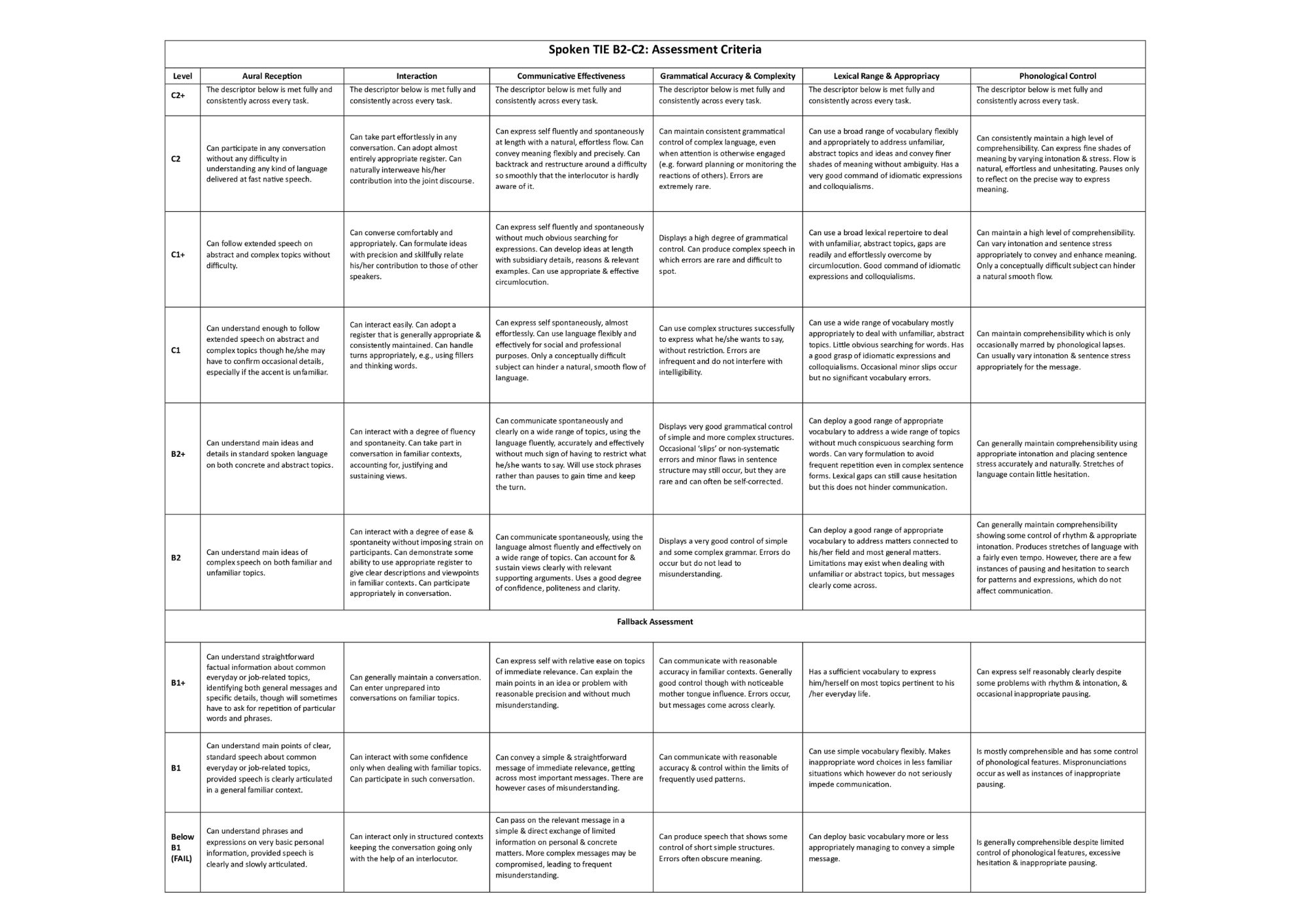
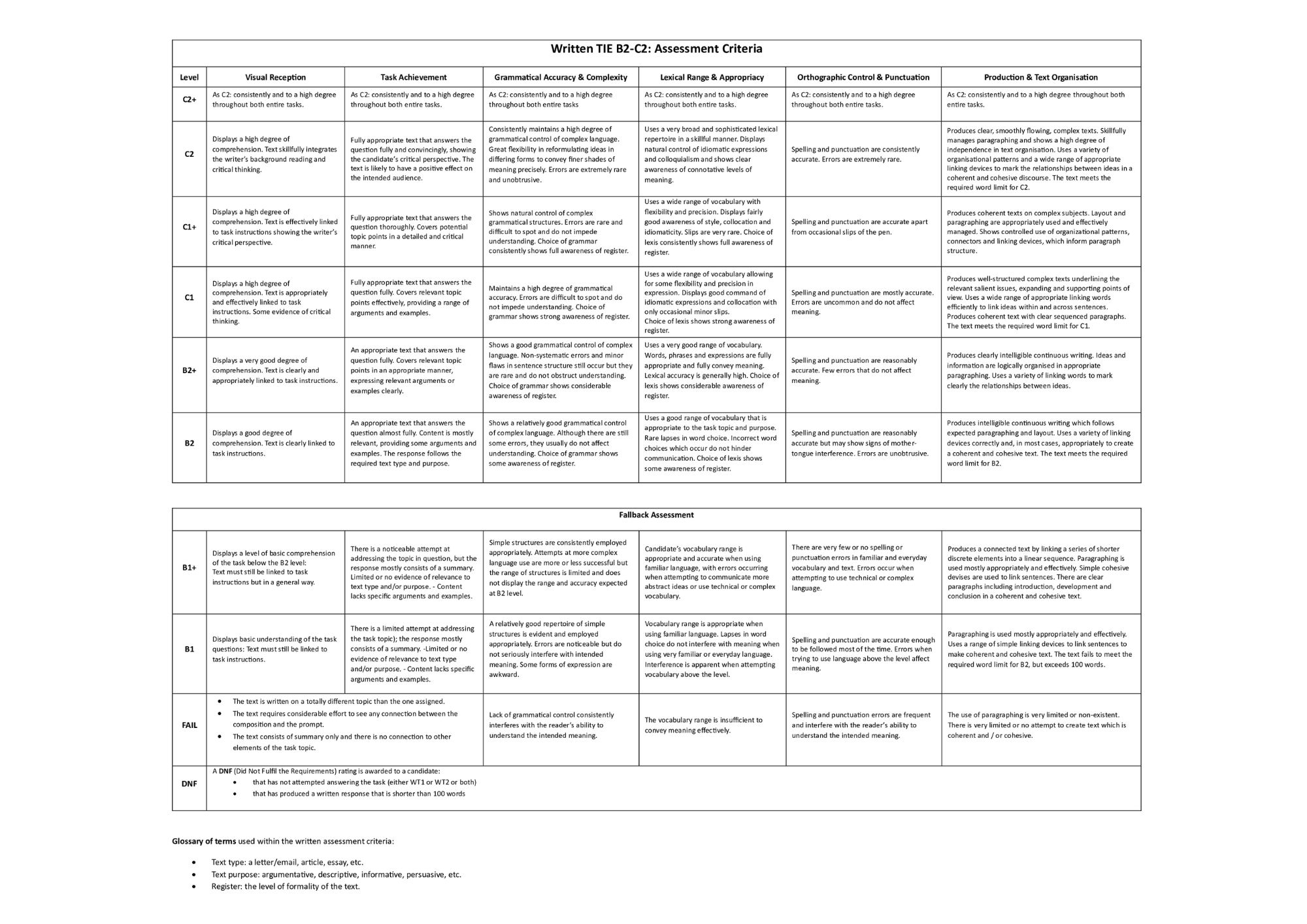
What is the pass rate for TIE exams?
There is no percentage score or pass mark for TIE exams. Candidates are assessed according to the CEFR descriptors and are awarded a grade (and corresponding certification) based on their performance.
How is the final score for each part of the exam calculated?
The final score for each part of the exam (Oral/Written Exam) is calculated as the average of 6 different scores, which correspond to the 6 assessment criteria used by TIE.
What is the role of the ‘+’ in the score?
The ‘+’ scores (e.g. B2+, C1+) are the intermediate levels between the basic language proficiency levels. In terms of the result, the ‘+’ grades help the candidate achieve the desired result, as the half-level difference (‘+’) between the grades is automatically rounded up in favor of the candidate.
Example of Spoken TIE Grade
- Aural reception: C1
- Interaction: C1
- Communicative Effectiveness: B2+
- Grammatical Accuracy: B2+
- Lexical range: B2+
- Phonological Control: C1
- Overall Oral Grade: C1
How is the final certification level awarded calculated?
The final certification level awarded to the candidate is calculated by combining the scores from the Spoken and Written Exams. Here are 4 examples of final certification:
Example 1: Same level of Spoken and Written Exam scores.
- Spoken: C2
- Written: C2
- Certification Level: C2
Example 2: A half-level difference (+) between the Written and Spoken Exam scores is rounded up to the higher level.
- Spoken: C1+
- Written: C2
- Certification Level: C2
Example 3: A difference of more than one level between the Written and Spoken Exam scores is rounded up to the intermediate level, provided that the candidate demonstrated abilities at that level in one of the two parts of the examination.
- Spoken: C2
- Written: B2+ (the candidate is at level B2 but demonstrated abilities/knowledge of the next level, i.e. C1)
- Certification Level: C1
Example 4: A difference of more than one level between the Written and Spoken Exam scores leads to certification of the lower level achieved by the candidate in one of the two parts of the exam, provided that they did not demonstrate the skills of the immediately higher intermediate level.
- Spoken: C2
- Written: B2 (the candidate is at level B2 but did not demonstrate the skills/knowledge of the next level, i.e. C1)
- Certification Level: B2
The table below shows all possible final certification levels according to all possible combinations of scores in the two parts of the exam.
| Spoken total score | Written total score | Final certification level |
| B2 | B1+ | B2 |
| B2 | B1 | B1 |
| C1+ | B2 | B2 |
| C1+ | B2+ | C1 |
| C1 | B2 | B2 |
| C1 | B2+ | C1 |
| C2 | B2 | B2 |
| C2 | B2+ | C1 |
| C2 | C1 | C1 |
| C2 | C1+ | C2 |
| C2+ | C1+ | C2 |
| C2+ | C1 | C1 |
For levels B2-C2
DNF (Did Not Fulfill Requirements)
Spoken Exam:
- The candidate did not submit a logbook with all the necessary tasks (Investigation/Book/News Story).
- The candidate presented a news story that was more than 12 months old.
Written Exam:
- The candidate did not attempt to answer one or both of the questions in the written examination.
- The candidate’s answer to one or both of the written exam questions was less than 100 words.
For levels A1-B1
Fail: The candidate scored below A1 in one or more criteria of the written/oral part of the exam, regardless of their score in the other criteria.
*Example: if the candidate produces a text that does not answer the question of the topic (“off topic”), they will receive a FAIL in the Visual Reception and Task Achievement criteria, so their final grade will be FAIL.
DNF (Did Not Fulfill Requirements)
- Spoken: The candidate did not present a logbook with all the necessary tasks (Investigation/Book).
- Written: The candidate did not attempt to answer the written question, either in WT1 (prepared) or WT2 (spontaneous) or both.
- Written: The candidate’s written response to WT2 (spontaneous) contained fewer than 40 words.
For levels B2-C2: Candidates receive a certificate if their performance is at least at level B1. If their language proficiency is assessed as lower than B1, they do not receive a certificate.
For levels A1-B1: Candidates receive a certificate if their performance is at least at level A1. If their language proficiency is assessed as lower than A1, they do not receive a certificate.
Are you interested in working as a TIE Examiner in your area?
Fill out the Application Form for New TIE Examiners below and we will contact you shortly.
Φόρμα Νέου Εξεταστή
"(Απαιτείται)" indicates required fields